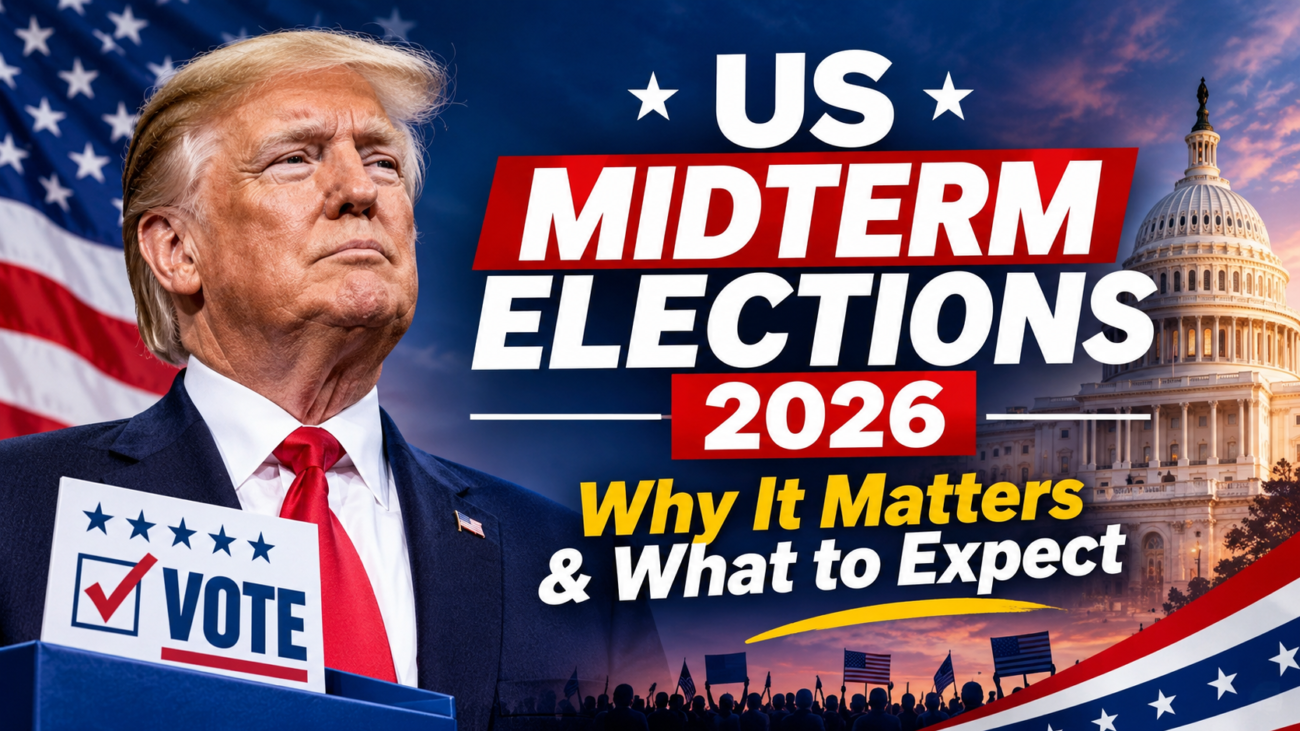
1. What Are the US Midterm Elections?
Midterm elections take place halfway through a US president’s four-year term. They determine which political party controls the House of Representatives and the Senate, while voters also choose governors and other state and local officials in many parts of the country.
Unlike presidential elections, midterms do not decide who occupies the White House. Instead, they determine how much support a president has in Congress to advance legislation, approve budgets, and pursue policy priorities.
House of Representatives
All 435 voting seats in the House are scheduled to be contested. Members serve two-year terms, making the chamber particularly responsive to changes in voter sentiment.
US Senate
Approximately one-third of the Senate is normally up for election every two years. In 2026, 35 regular Senate seats are scheduled to be contested.
Governors and state legislators will also face voters in numerous states. These contests matter because state governments influence areas such as education, public safety, taxation, and election administration.
2. The Battle for Control of Congress
The central question of the 2026 midterms is whether Republicans can maintain control of Congress or Democrats can win enough seats to change the balance of power.
Control of either chamber can significantly affect the legislative agenda. Even when a president remains in office, a shift in congressional control can make passing laws more difficult and increase scrutiny of the administration.
The House
The House plays a major role in originating tax and spending legislation. Its leadership also influences committee investigations, legislative priorities, and the timing of votes.
The Senate
The Senate considers legislation, confirms presidential nominees, and handles treaties and impeachment trials. Its party balance can shape judicial appointments and the administration’s ability to govern.
The outcome will depend on candidate quality, voter turnout, local political conditions, campaign spending, and how Americans evaluate the administration’s performance.
3. The Trump Factor: A Political Test for the President
President Donald Trump will be a central figure in the midterm campaign. Although his name will not appear on the presidential ballot, his policies and public standing are likely to influence how many voters approach their choices.
Midterm elections often function as a referendum on the party occupying the White House. Voters may use them to express approval or frustration with the administration’s handling of the economy, immigration, government spending, and international affairs.
What the results could mean
Strong Republican results could help the administration pursue its agenda in Congress. Democratic gains could increase legislative resistance, expand congressional oversight, and make negotiations over major policies more difficult.
The results will not, by themselves, determine the 2028 presidential election. However, they could influence party strategy, fundraising, candidate recruitment, and the political narratives that develop ahead of that contest.
4. The Issues Likely to Shape Voter Decisions
Voters rarely make their decisions on a single issue. The economy, immigration, healthcare, and the direction of US foreign policy are among the subjects likely to feature prominently in the national debate.
The Economy and Cost of Living
Household expenses, housing affordability, wages, employment, and the cost of everyday goods can influence voters’ perceptions of the government. Many will judge economic policy by whether they feel financially secure and whether their living standards are improving.
Immigration and Border Security
Immigration remains a significant political issue in the United States. Voters may evaluate border enforcement, asylum procedures, legal immigration, deportation policies, and the economic effects of immigration.
Healthcare
Access to medical services, insurance costs, prescription drug prices, and federal healthcare spending can all affect household finances. Differences between the parties’ approaches may become important in competitive districts and states.
Tariffs, Trade, and Foreign Policy
Trade policy can affect domestic manufacturers, farmers, retailers, and consumers. Voters may consider whether tariffs support American industry or increase costs for businesses and households.
International conflicts, defence spending, and relations with major trading partners may also influence public opinion, particularly when they have visible economic or security consequences.
5. Senate Races to Watch
Senate contests can have an outsized impact because the chamber has only 100 seats. A small number of closely contested races can determine which party controls the Senate and whether the president’s nominees face a supportive or resistant majority.
States receiving particular attention during the campaign may include competitive or politically changing states such as:
- Georgia: A closely divided electorate makes turnout and candidate appeal especially important.
- Michigan: Economic conditions, manufacturing, and union voters can influence statewide contests.
- North Carolina: Changing demographics and competition between the parties can make statewide races consequential.
- Maine: Independent-minded voters and candidate-specific factors can complicate party expectations.
- Ohio: Economic concerns, industrial employment, and national political trends may shape voter choices.
These are examples of states that can attract political attention; the competitiveness and importance of each specific race will depend on the candidates, campaign developments, and updated polling.
6. Three Possible Election Outcomes
Scenario One: Democrats Win the House
If Democrats gain control of the House, the administration could face greater resistance to its legislative priorities. House leadership and committee control would shift, potentially bringing more investigations and oversight of the executive branch.
Scenario Two: Republicans Retain Both Chambers
If Republicans maintain control of both the House and Senate, the administration may find it easier to advance legislation, negotiate budgets, and confirm presidential nominees. The size of the party’s majorities would still matter.
Scenario Three: Congress Is Divided
If each party controls one chamber, major legislation could become more difficult to pass. Budget negotiations and other essential legislative work may require compromises, while political disagreements could intensify.
7. Why the US Midterms Matter to the Rest of the World
The United States plays a major role in global trade, finance, technology, and security. Changes in congressional control can influence policy debates that matter well beyond America’s borders.
Trade and Business
Debates over tariffs, industrial policy, taxation, and international trade can affect companies, exporters, investors, and supply chains around the world.
Security and Diplomacy
Congressional decisions on defence budgets, foreign assistance, and oversight can influence America’s international commitments and diplomatic priorities.
India–US Relations
Businesses and policymakers in India may watch discussions around tariffs, technology cooperation, immigration, defence partnerships, and bilateral trade.
Global Markets
Political uncertainty and changes in fiscal or trade policy can affect investor expectations, currency markets, and business confidence, although market reactions are never guaranteed.
Congressional control is only one influence on American foreign policy. The president, executive agencies, international developments, and existing laws also shape the direction of US relations with other countries.
8. Looking Ahead to 2028
The midterm results could influence the next presidential election by changing party priorities, fundraising strategies, and perceptions of political momentum.
A strong result could energize a party’s supporters and help it recruit candidates. A disappointing result could trigger internal debate over campaign strategy, messaging, and leadership. Neither outcome guarantees success in 2028, when voter priorities and political circumstances may be different.
The midterms will also provide information about the issues motivating voters, the effectiveness of campaign strategies, and the strength of each party’s coalition across different regions and demographic groups.
Conclusion: An Election With National and Global Consequences
The 2026 US midterm elections will be an important measure of public opinion during Donald Trump’s presidency. Control of the House and Senate will determine how legislation is debated, how closely the administration is scrutinized, and how much room each party has to pursue its priorities.
For voters, the central questions will involve everyday concerns such as the economy, immigration, healthcare, and national security. For the rest of the world, the results may offer clues about the future direction of American trade, diplomacy, and economic policy.
The most useful way to follow the election is to watch the individual races, understand the issues at stake, and distinguish confirmed results from campaign predictions and polling estimates.
Further Reading and Official Resources
- Federal Election Commission — Official information on federal campaign finance and election rules.
- USA.gov: Voting and Elections — Voting information and election resources for US citizens.
- Congress.gov — Track legislation, congressional activity, and official records.
